


Arable Land Lease Prices 2026: €407/ha nationally, the figures for every federal state and the comparison with solar rent
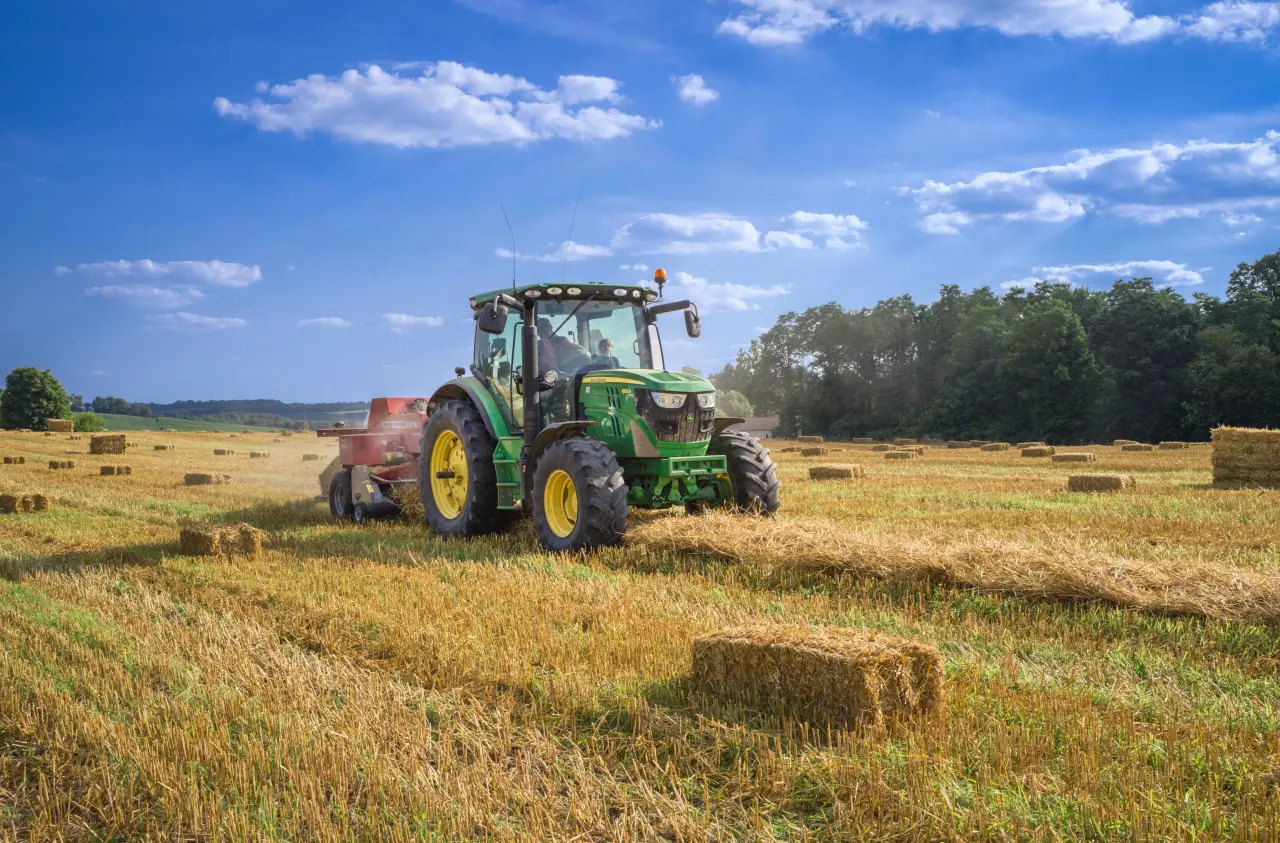
Arable land in Germany most recently cost an average of 407 euros per hectare per year, and 511 euros on newly concluded leases; permanent grassland stood at 212 euros. Those are the figures of the 2023 agricultural structure survey by the Federal Statistical Office (Destatis), the most recent official numbers, because the next survey will not appear before 2027. The range behind them is enormous: from 116 euros in Saarland to 781 euros on new leases in North Rhine-Westphalia. This guide shows the figures for all 16 federal states, explains what actually drives the price of your land, converts the rent to a monthly figure and to a yield on the purchase value, and sets it against the solar rent that yields seven to twelve times as much on the same land.
"Check in 10 seconds — no email, no callback"
Key Takeaways
Arable land: €407/ha on existing leases, €511/ha on new leases (Destatis, agricultural structure survey 2023). Grassland €212/ha. Across all land €357/ha.
North Rhine-Westphalia is the most expensive state (€659 existing / €781 new per hectare of arable land), followed by Lower Saxony (€643 / €755) and Schleswig-Holstein (€571). Saarland €116, Brandenburg €198.
Per month that is 34 euros per hectare nationally and 65 euros in NRW; payment, however, is annual.
More than doubled since 2003: arable rent +111 %, grassland rent +75 %. 60 % of the 16.6 million hectares of agricultural land are leased.
Purchase values 2024: €42,800/ha of arable land, €148,700 in Lower Bavaria, €13,200 in Brandenburg. In 2025 the top states fell slightly for the first time.
Solar rent: €3,000–5,000/ha/yr, agri-PV €1,000–3,000, battery storage €20,000–30,000 on 0.5–3 ha. One hectare of solar park earns around €48,000 of electricity a year.
Sale does not break lease (§ 593b BGB), and a running lease cannot be ended unilaterally for a solar project.
The current price level: 407 euros per hectare of arable land
The 2023 agricultural structure survey by the Federal Statistical Office (published April 2024, the last survey before 2027) reports three figures that are frequently mixed up:
| Land type | Existing leases 2023 (all running contracts) | New leases 2023 (concluded in the previous 2 years) |
|---|---|---|
| Arable land | €407/ha/yr | €511/ha/yr |
| Permanent grassland | €212/ha/yr | — |
| All agricultural land | €357/ha/yr (2020: €329) | — |
| Vineyards | €1,122/ha/yr | — |
The frequently quoted "around 350 euros" is therefore the average across all land including grassland. Anyone leasing out arable land should reckon with 407 euros on existing leases and with 511 euros when concluding a new one today. The new-lease figure is the more relevant one, because the existing-lease average contains many contracts at a long-superseded price level: agricultural leases typically run 9 to 12 years, and without an index clause a contract from 2014 still carries the 2014 price today.
There is no new official figure for 2026. The surveys of 2010, 2013, 2016, 2020 and 2023, however, show an uninterrupted rise (2020 to 2023 across all land plus 9 percent), and regional rent surveys by the chambers of agriculture point to a continuation. A sound benchmark for a re-letting in 2026 is therefore the 2023 new-lease figure for your own region as a lower bound.
How much rent per month? The conversion
Many owners think in monthly amounts because they are used to rental income. Spread over the month, the national average for arable land comes to 34 euros per hectare (407 ÷ 12), the new-lease rent to 43 euros, grassland to 18 euros. In North Rhine-Westphalia a new lease yields around 65 euros per hectare per month. In agriculture, however, rent is not paid monthly but once a year, usually after harvest; without an express agreement § 587 BGB applies, under which the rent falls due only at the end of the lease year. For comparison: a solar rent of 3,000 to 5,000 euros per hectare equals 250 to 417 euros a month.
Lease prices by federal state: the 2023 table
The national average is a statistical construct and describes no real field. The spread between the states is wider than the average itself. The official figures across all agricultural land (arable and grassland combined, existing leases 2023):
| Federal state | Rent 2023, all land (€/ha/yr) |
|---|---|
| North Rhine-Westphalia | 560 |
| Lower Saxony | 548 |
| Schleswig-Holstein | 479 |
| Bavaria | 415 |
| Hamburg | 332 |
| Saxony-Anhalt | 323 |
| Mecklenburg-Western Pomerania | 305 |
| Rhineland-Palatinate | 290 |
| Baden-Württemberg | 274 |
| Bremen | 234 |
| Saxony | 214 |
| Hesse | 207 |
| Thuringia | 195 |
| Brandenburg | 185 |
| Berlin | 155 |
| Saarland | 99 |
| Germany | 357 |
For arable land alone the figures are consistently higher. The documented state values for 2023 (Federal Statistical Office, state statistical offices, German Farmers' Association situation report):
| Federal state | Arable, existing leases (€/ha/yr) | Arable, new leases (€/ha/yr) |
|---|---|---|
| North Rhine-Westphalia | 659 | 781 |
| Lower Saxony | 643 | 755 |
| Schleswig-Holstein | 571 | — |
| Baden-Württemberg | 311 | 434 |
| Saxony | — | 260 |
| Thuringia | — | 257 |
| Brandenburg | 198 | 215 |
| Saarland | 116 | 132 |
| Germany | 407 | 511 |
Two patterns stand out. First, the north-south and west-east gradient: the livestock regions of north-west Germany pay three to four times the eastern states, even though the soils in Saxony-Anhalt or Thuringia are among the best in Germany. It is not soil quality that decides, but farm structure and competition for land. Second, the spread within a single state: in North Rhine-Westphalia the Münster administrative district sits at 787 euros across all land, Düsseldorf at 638 euros and Arnsberg at 400 euros. In Lower Saxony, specialised livestock farms paid an average of 866 euros per hectare of arable land in 2023, and as much as 981 euros on new leases. Anyone wanting to estimate the rent for their own land therefore needs the figure for their district, which the state statistical offices publish in the agricultural structure survey.
The share of leased land also differs widely: nationwide 60 percent of the 16.6 million hectares of agricultural land are leased, in Thuringia 75 percent, in Bavaria only 52 percent. Where much of the land is owned by the farms themselves, competition for the scarce leased land is harder, which explains Bavaria's high figures despite its small farm structures. What solar rent looks like in Bavaria is covered in the guide Ground-mounted photovoltaics in Bavaria.
Whether your land could carry a solar rent of several thousand euros instead of a few hundred euros of agricultural rent does not depend on the federal state, but on grid proximity, protected areas and regional planning. The free ENLAPA area check shows these three factors in seconds, without giving any personal details.
Grassland: half the arable rent
Permanent grassland cost 212 euros per hectare nationwide in 2023, from 80 euros in Saarland to 288 euros in North Rhine-Westphalia; in Baden-Württemberg it was 163 euros, and 224 euros on new leases. The price gap to arable land has a business reason: arable land can carry cash crops whose proceeds are realised directly on the market. Permanent grassland is used as fodder, so the return only arises through livestock and therefore one step later in the value chain. On top of that, permanent grassland is legally protected and cannot simply be ploughed up.
For solar use this relationship reverses: there a weak soil is not a disadvantage but often an advantage, because agricultural competition for the land is lower and the permitting discussion runs more smoothly. Details are set out under lease meadow and grassland for solar.
Price development: doubled in 20 years
Between 2003 and 2023 rents nationwide more than doubled (plus 105 percent); arable land rose by 111 percent, grassland by 75 percent. From 2013 to 2023 alone the arable rent gained 47 percent. Agriculture now pays around 4 billion euros of rent a year.
The market for agricultural land has one property that sets it apart from almost every other market: supply is fixed. No new arable land is created. On the contrary, land is lost every day to housing, commerce and transport. Any additional demand therefore meets a quantity that cannot expand, and feeds straight into the price. On the demand side several developments have worked at once:
- Farm growth. The number of farms has been falling for decades while average farm size rises. Growing farms compete for the same finite area.
- Biogas. Where several plants in one area need substrate, an additional and well-funded demand for silage maize arises that lifts the rent level across the whole region.
- Livestock. In regions with high livestock density, farms need land as proof of capacity for slurry application. That land is not valued by its yield potential but by what it makes possible elsewhere. That is exactly what explains the 981 euros new-lease rent paid by Lower Saxony's livestock farms.
- Producer prices. Phases of high grain and rapeseed prices raise willingness to pay, and because contracts run long, part of that increase stays in the market after prices fall back.
- Non-agricultural demand. Photovoltaics, battery storage and compensation areas have been competing for the same plots for several years. Agricultural rent is affected only indirectly, because a solar project takes the land out of the agricultural market; purchase values react more clearly.
Because leases bind for many years, all of these effects work with a delay. A price rise only reaches an individual field when its contract expires. That is precisely why the timing of a re-letting is the single most important lever an owner has.
What really determines the lease price
The level of the rent follows from what a farmer can earn on the land and from the competition for it. The main drivers, in order of importance:
Local competition. By far the most underestimated factor, and the state table above proves it: whether two or eight farms in the area want to grow changes the achievable level more than twenty soil points do. Regions with many biogas plants or high livestock density sit structurally above the average.
Soil quality and water supply. They determine the natural productivity and are captured by the Ackerzahl. A site with reliable water supply delivers stable yields in dry years and is therefore worth more than a site with the same soil rating but pronounced summer drought.
Field size and shape. A contiguous 20-hectare field can be farmed far more cheaply with modern machinery than four scattered parcels of the same total size. Narrow, tapering plots or plots cut through by ditches cost turning time and therefore gross margin.
Distance from the farmstead and accessibility. Every kilometre of approach shows up in machinery and labour costs. A field close to the yard is worth considerably more to the immediate neighbour than to a farm ten kilometres away, which makes willingness to pay vary widely.
Contract term and contract age. Long terms give the tenant planning certainty and justify a higher price from their perspective. Conversely, a very short term depresses the price, because investments in soil improvement do not pay back.
Use restrictions. Contractually agreed cultivation requirements, for example for nature conservation, reduce the achievable rent because they narrow the farming options.
Reading the Ackerzahl correctly
The Ackerzahl (soil rating) comes from the official soil survey and rates the natural productivity of a field on a scale from 0 to 100. It reflects soil type, condition class and formation, supplemented by additions and deductions for climate and terrain. For grassland, the corresponding Grünlandzahl applies.
For owners the Ackerzahl is practically relevant for two reasons. First, it is officially documented and therefore an objective reference point in negotiation that both sides accept. Second, it explains a substantial part of the price difference within a region: between a site with 30 and one with 70 soil points there are often several hundred euros of rent per hectare.
A common error, however, is to treat the Ackerzahl as the only yardstick. It describes natural yield potential, not the competitive situation. Land with 45 soil points in the Münsterland comfortably achieves more than land with 80 soil points in the Magdeburg Börde, and the state table shows exactly that.
Determining the local customary rent
The local customary rent is the rent actually paid for comparable land in a comparable location. The term is also legally relevant, because under the Landpachtverkehrsgesetz the authority can object to a disproportionately high rent. Reliable sources are:
- the agricultural structure survey of the state statistical offices, which reports lease payments down to district level (as of 2023, next survey 2027),
- the chambers of agriculture, which maintain regional rent surveys and give context on request,
- the valuation committees for land values at district level, which maintain purchase price registers and can derive rent levels from them,
- the land exchanges and tenders of public landowners (churches, municipalities, BVVG), whose award figures are often published and show the current re-letting level.
In practice, the most reliable route to a realistic price runs through a tender: offering the land to several interested parties and collecting bids reveals the actual market level more precisely than any statistic. What matters is not to look at the highest figure alone, but at the bidder's financial standing and farming quality. Land that is exhausted over twelve years costs more in the end than the extra rent brought in.
Old rents and new rents
The single biggest lever for landowners rarely sits in the negotiation, it sits in the age of the contract. The statistics put a number on it: 407 euros existing against 511 euros new nationally, 659 against 781 euros in North Rhine-Westphalia. A contract concluded in 2012 without an index clause still carries the 2012 price level today, which according to the survey series lies around 40 percent below today's.
Two consequences follow. First, every new contract needs an index clause linking the rent to a published index at agreed intervals. Second, owners should keep the expiry of a contract in view in good time, because the notice period for open-ended contracts under § 594a BGB amounts in practice to up to two years. The contractual groundwork is covered in the guide Agricultural Lease Agreement, the notice periods and routes to termination in the guide Terminating an agricultural lease.
Leasing or selling: rent against purchase value
Purchase prices for arable land have risen considerably more over the past two decades than rents have. In 2024, according to the Federal Statistical Office, buyers paid an average of 42,800 euros per hectare of arable land nationwide (plus 6 percent on 2023), 26,800 euros for grassland and 35,300 euros across all agricultural land; 53,500 euros in the former West German states, 16,800 euros in the eastern states. The regional spread is even wider than for rents:
| Region | Purchase value 2024 per hectare of agricultural land |
|---|---|
| Lower Bavaria (administrative district) | €148,700 |
| Upper Bavaria (administrative district) | €124,100 |
| Münster (administrative district) | €119,600 |
| Düsseldorf (administrative district) | €100,700 |
| Germany | €35,300 |
| Saarland | €13,300 |
| Dresden (administrative district) | €13,200 |
| Brandenburg | €13,200 |
| Trier (administrative district) | €12,700 |
In the 2025 figures, published by Destatis in August 2026, the top states fell slightly for the first time in years: Bavaria 93,720 euros per hectare of arable land (minus 0.7 percent), North Rhine-Westphalia 91,496 euros (minus 6.4 percent), Lower Saxony 66,376 euros, Schleswig-Holstein 49,510 euros, Baden-Württemberg 39,570 euros, Saarland 14,097 euros. Whether that is a turning point or a pause cannot be read from a single year.
Setting the rent against the purchase value gives the rental yield: 407 euros on 42,800 euros is just under one percent before tax, in North Rhine-Westphalia 659 on 91,496 euros around 0.7 percent, in Brandenburg 198 on 13,200 euros around 1.5 percent. That figure alone appears to argue for selling. It falls short, however, because it leaves out three things:
- The capital appreciation stays with the owner. Leasing hands over only the use, not the substance. The land price development that arithmetically depressed the yield accrues to the landowner, not to the tenant.
- Use options are preserved. Land that has been sold can no longer be used later for photovoltaics, a battery storage site or a compensation measure. Precisely these options have become considerably more valuable in recent years: a solar rent of 3,000 to 5,000 euros on a purchase value of 42,800 euros equals a running return of 7 to 12 percent.
- A sale is irreversible and has tax consequences. Depending on whether the land belongs to business assets and on the holding period, a taxable disposal gain arises that quickly relativises the difference to the running rent.
The practical middle path is leasing with a clear contract: a market rent, an index clause, a manageable term, and an express provision that any change of use requires the owner's consent. The land then keeps earning without foreclosing the future.
Taxes and levies when leasing out
Lease income is taxable. The classification depends on whether an agricultural and forestry business exists:
- With an active business, the income counts as income from agriculture and forestry.
- For private individuals without a business, it regularly counts as income from letting and leasing.
For VAT purposes, the leasing of land itself is generally not taxable; the position can differ where operating equipment is leased along with it.
The cessation of the business deserves particular attention. Where a business is leased out in full, the owner has a choice: they can declare cessation, whereupon the land moves into private assets and the hidden reserves become taxable in one step. If no declaration is made, the business continues for tax purposes as a leasing business and taxation is deferred into the future. This decision should be settled with a tax adviser before the contract is signed, because it is hard to correct later.
Leasing for solar adds further questions, in particular the distinction between agricultural and forestry assets and real property assets, and the consequences for property tax and inheritance tax. The connections are covered in the guide Taxes when leasing farmland for solar, and for inheritance additionally in Inherited farmland and inheritance tax.
For property tax and association contributions the rule is: the debtor towards the municipality or the association is the owner. Passing them on to the tenant is permitted and widespread, but it must be expressly agreed. Without a provision the burden stays with the landowner.
Lease and sale: sale does not break lease
If leased land is sold, the lease does not end. Via § 593b BGB the rules on a change of owner in tenancy law apply accordingly, and the buyer steps into the running contract.
This has a direct effect on pricing: land with a long remaining term at a low old rent achieves a lower purchase price than free land, because the buyer cannot use it themselves for years and cannot adjust the rent. Anyone intending to sell should therefore know the remaining term and bring it into the price negotiation. Anyone buying should inspect the existing lease in full before signing.
Agricultural rent and solar rent side by side
The difference between an agricultural rent and a solar rent is not one of degree but of structure. It rests on the fact that the yield of the land changes entirely: instead of returns from field crops there is electricity production, whose value creation per hectare is many times higher. Roughly 1 MWp of photovoltaics fits on one hectare and generates around one gigawatt-hour of electricity a year in Germany; at the volume-weighted award value of 4.79 ct/kWh from the Federal Network Agency's July 2026 auction, that is around 48,000 euros of electricity revenue per hectare per year. Out of that sum the plant, grid connection, operation and rent are paid; how that fits together is explained in the guide Feed-in tariffs in Germany 2026.
| Type of use | Rent per hectare per year | Ratio to arable rent (€407) |
|---|---|---|
| Arable land, existing leases (national) | €407 | 1× |
| Arable land, new leases (national) | €511 | 1.3× |
| Arable land, new leases NRW (most expensive state) | €781 | 1.9× |
| Agri-photovoltaics | €1,000–3,000 | 2.5–7× |
| Ground-mounted PV, standard location | €3,000–4,000 | 7–10× |
| Ground-mounted PV, good location | €4,000–5,000 | 10–12× |
| Ground-mounted PV, premium location | up to ~€5,500 | up to 13.5× |
| Large-scale battery storage (0.5–3 ha) | €20,000–30,000 | 50–74× |
Even the standard tier therefore reaches seven times the arable rent and four times the most expensive new-lease rent in Germany. The reasons for that gap are the far higher value creation per hectare, the long contractual commitment of 20 to 30 years, and the operator's interest in a reliably available site over the long run. The full ranges by location quality and the six price drivers are in the guide Photovoltaic lease prices 2026, the process from plot to grid connection under Building a solar park.
What determines the solar rent
The factors differ almost entirely from those of the agricultural rent:
- Grid connection. Distance to a suitable grid connection point and the capacity actually available there. This is by far the most important single factor, because every kilometre of connection cable comes out of the same sum from which the rent is paid.
- Eligibility. Whether the land is eligible under the EEG, for example as a disadvantaged area or through a margin strip along motorways and railway lines. The eligible area is explained in the guide Solar Package I for open spaces.
- Planning law. Whether the municipality is willing to adopt a development plan. Without municipal support no project comes about, regardless of every other factor.
- Size and shape. Contiguous areas from roughly 5 hectares are considerably more attractive to developers than scattered small parcels.
- Protected areas and restrictions. Nature conservation, water protection, heritage protection or archaeological monuments can prevent a project or make it substantially more expensive.
Soil quality plays hardly any role here. For solar use a weak site is often the easier starting position, because agricultural competition for the land is lower and the permitting discussion runs more smoothly. That reverses the logic of the agricultural rent: precisely the land that sits at the bottom of the state table is often the more interesting for solar. Anyone wanting to keep farming the land will find the basics under Agri-photovoltaics: agriculture and energy.
Battery storage as a third option
Large-scale battery storage pays around 25,000 euros per hectare per year, with a usual range of 20,000 to 30,000 euros. The land requirement, however, is only 0.5 to 3 hectares, so the absolute rent stays limited despite the high per-hectare rate. What matters is practically only the proximity to a suitable substation, which is why this use is an option for a small share of sites at all. What is needed is set out under lease land for battery storage and in detail in the guide Leasing land for large-scale battery storage.
From a running lease to solar use
An existing agricultural lease initially stands in the way of a solar project, because the developer needs the land free. Three points are decisive.
First, the tenant may not change the type of use unilaterally. Converting to a solar park requires the owner's consent. Under § 589 BGB the tenant may not hand over use to a third party without permission either. As the owner, you therefore decide whether your land is available for a solar project.
Second, a running contract cannot be ended unilaterally in order to enable a different use. Wanting a change of use is not good cause within the meaning of § 594e BGB and does not shorten the period under § 594a BGB either. Which notice periods and routes actually exist is set out in the guide Terminating an agricultural lease.
Third, the usual route is therefore a mutual termination agreement, often combined with a settlement payment to the tenant. Economically that is normally viable: even a settlement of several years' rent is covered within a few years by the difference between 407 euros of agricultural rent and 3,000 to 5,000 euros of solar rent. The contractual particularities of solar leasing, from the easement in the land register to decommissioning security, are covered in the guide Photovoltaic Lease Agreement.
Common mistakes when leasing out arable land
- Taking the national average as the price. 357 euros is the average across all land, 407 euros the existing-lease figure for arable land; for a re-letting, the new-lease figure of your own region counts.
- Agreeing no index clause. Over twelve years a fixed rent loses noticeable purchasing power, and the gap between old and new rents grows every year.
- Approaching only one interested party. Without a comparative offer the actual market level stays unknown.
- Looking only at the highest price. Financial standing and farming quality decide the condition of the land after twelve years.
- Not settling the due date. Without an agreement § 587 BGB applies, under which the rent falls due only at the end of the lease year.
- Leaving property tax and association contributions open. Without an apportionment agreement the burden stays with the landowner.
- Leaving payment entitlements unregulated. Their allocation at the end of the contract is a classic point of dispute.
- Not governing change of use. As soon as solar or storage use comes up, the contractual basis is otherwise missing.
- Ignoring the remaining term when selling. Sale does not break lease, and the purchase price falls accordingly.
- Planning too late. The notice period under § 594a BGB amounts in practice to up to two years.
Frequently Asked Questions on lease prices for arable land
Conclusion
In 2026 arable land in Germany yields 407 euros per hectare per year on existing leases and 511 euros on new ones, grassland half of that. The state table runs from 116 euros in Saarland to 781 euros on new leases in North Rhine-Westphalia, and within a single state there is almost a factor of two again between the Münsterland and the Sauerland. For landowners that means: the new-lease figure for your own district is the negotiating basis, the index clause the most important contract term, and a tender to several interested parties the most precise price test. Anyone who keeps the land rather than selling secures, beyond the capital appreciation, above all the option that yields seven to twelve times as much on the same hectare: the solar rent of 3,000 to 5,000 euros. Whether your land qualifies can be checked free of charge with the ENLAPA area check, or you can list your land to obtain non-binding lease offers from vetted project developers. The specific conditions for arable land are set out under lease arable land for solar, the overview under lease land for a solar park.
Sources: Federal Statistical Office (Destatis), agricultural structure survey 2023, press release no. 153 of 18 April 2024 (lease payments by federal state, share of leased land) and statistical report "Landwirtschaftliche Betriebe – Eigentums- und Pachtverhältnisse 2023" (arable land €407, permanent grassland €212, vineyards €1,122); Destatis, purchase values for agricultural land 2024 (published October 2025) and 2025 (published August 2026, state figures for arable land); German Farmers' Association (DBV), Situationsbericht 2025/26, chapter 3.2 land and lease market (new leases 2023 by federal state, national new-lease average €511, rent expenditure €4 bn); IT.NRW, press release of 11 July 2024 (NRW: arable land €659, permanent grassland €288, administrative districts); Lower Saxony State Office for Statistics, agricultural structure survey 2023 (arable land €643, livestock farms €866/981); Baden-Württemberg State Statistical Office, press release of 12 April 2024 (arable land €311, new leases €434, grassland €163/224); Federal Network Agency, solar auction first segment, bid date 1 July 2026 (award value 4.79 ct/kWh); Federal Information Centre for Agriculture (praxis-agrar.de) and top agrar, analyses of the Destatis data. Solar, agri-PV and storage rents: ENLAPA market observation 2026. As of 10 September 2026. This article does not replace legal or tax advice; all price figures are guide values that can differ considerably by region.