


Battery Storage Boom 2026: Why Developers Are Hunting for Sites
Looking for concrete lease figures? Current lease rates per hectare, contract terms and decommissioning rules are covered in the guide Battery Storage Lease Prices 2026. If you want to offer your site right away, check grid proximity in seconds on lease land for battery storage. This article explains the market behind them: capacity growth, site criteria and permitting.
Summary
Leasing land to a battery storage operator has quickly evolved from a niche idea to a sought-after model for property owners. With rapidly increasing electricity volumes from wind and solar, energy companies are desperately searching for locations to build large battery storage facilities. For owners of suitable properties – especially in sunny regions like Bavaria – this opens up attractive additional income. Instead of agriculture or leaving land fallow, leasing to a storage project can generate five-figure euro amounts per hectare annually, secured over decades.
These new opportunities go hand in hand with the energy transition: Every newly installed megawatt-hour of storage capacity helps make the power grid more stable and flexible. This is why battery storage projects are politically and economically desirable – a real boom is emerging. In this article, you will receive a comprehensive overview of the market and its potential, the financial prospects, as well as the framework conditions for planning and approval. We also highlight a practical example from Bavaria and provide tips on how to successfully offer your land for storage projects. Is it worth it? What should you consider? – Keep reading to get well-founded answers to these questions.
Market Analysis and Potential
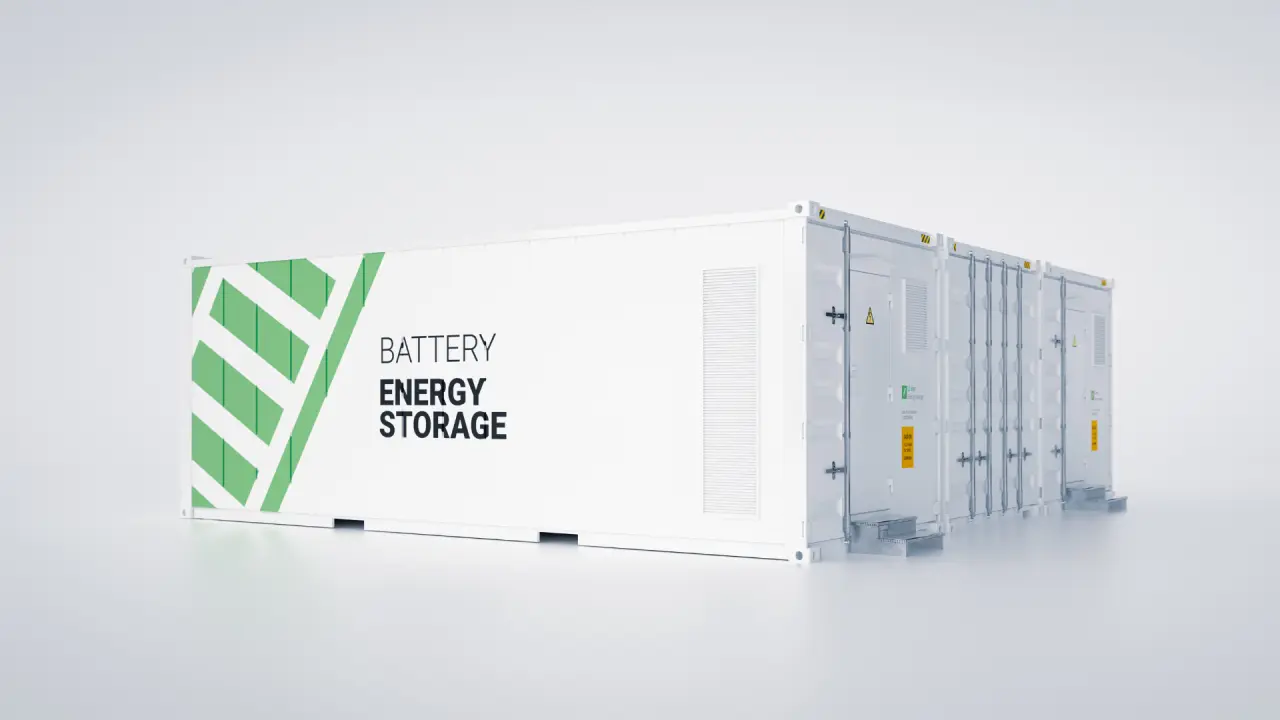
The market for large battery storage systems in Germany is on a strong growth trajectory. Just a few years ago, there were only isolated pilot projects, but now large-scale storage facilities are being built at a rapid pace. This trend is particularly evident in Bavaria and southern Germany: According to data from the Federal Network Agency, around 200 large-scale battery storage systems are currently in concrete planning in Bavaria alone, with almost half scheduled to be connected to the grid within a year. Leonhard Probst from Fraunhofer ISE confirms a veritable storage boom – currently about 1 GWh of capacity is installed in Germany, but four times that amount has already been approved, with even larger volumes in inquiry processes with grid operators. In other words: In the coming years, many times the current storage capacity will be built.
This development is driven by several factors. First, the costs for battery storage have been falling sharply for years – large lithium-ion batteries are becoming increasingly cheaper per MWh, significantly improving economic viability. Second, the need for flexibility in the electricity system is steadily growing. The more renewable energy is fed into the grid, the more important storage becomes to balance supply and demand. A current analysis by Frontier Economics therefore describes battery storage as an "opportunity technology" with dynamic development in the coming years and decades. Even federal politics has recognized the signs: The German Solar Industry Association (BSW) reports the prospect of quintupling the current installed large-scale storage capacity within two years. This forecast – backed by a market analysis commissioned by the BSW – shows how rapidly expansion could progress.
Unlike assumptions made a few years ago, current studies assume that storage will be needed on a large scale in the medium term. While earlier expert opinions speculated that the energy transition could initially proceed without many new storage facilities, reality now proves the opposite: The combination of inexpensive solar power at midday and expensive peak electricity in the evening enables a profitable business model for storage operators. Large battery storage no longer requires any subsidies but refinances itself through arbitrage gains and grid services. This also has positive effects for all electricity customers, as storage reduces costs in the system – it decreases expensive grid and redispatch interventions and helps to smooth out the average electricity price.
Politically, the framework conditions are being successively improved. For example, BSW Solar is advocating for large-scale storage to be privileged in building law to accelerate approvals. Support programs for innovative storage and research projects (such as new battery chemistries) also support the trend. In short: The market for battery storage is highly dynamic and promising. Already today, large batteries provide important grid stability services, and tomorrow they could form a backbone of electricity supply in much greater numbers. For property owners, this means: The demand for suitable sites is increasing, in Bavaria as well as nationwide. Those who act now and offer their land will find receptive ears among investors.
Profitability and Income Potential
The profitability of leasing land for battery storage is excellent from an owner's perspective. To give you a sense of the scale, here's an example calculation: Suppose you own a 2-hectare open space near a substation. A project developer offers you a lease of 25,000 € per hectare. That results in 50,000 € per year in income. With a contract term of 20 years, this would amount to – without considering possible increases – a sum of 1 million euros. By comparison, the same area used for agriculture might bring in 800 € per year – the battery storage thus yields roughly 60 times the return. Even compared to leasing as a solar park (approx. 4,000 € per ha/year), the revenues are still ten times higher.
Of course, the exact lease depends on the individual case. What factors influence the lease income? Here are the most important influencing factors:
-
Grid connection and location: As already emphasized, proximity to the grid substantially determines the amount of the lease. Properties directly adjacent to a suitable substation achieve premium prices, as the developer has to invest little in cable routes and grid connection. Good transport connections (access roads) also slightly increase the attractiveness of the site. Conversely, more remote areas may mean deductions because the developer has to lay longer lines or create infrastructure.
-
Size and expandability: Larger areas offer space for more extensive storage capacities and economies of scale. Many providers pay rent per hectare, whereby a larger project can be operated more efficiently overall and therefore generates more per hectare. This can be reflected in higher bids. If your area is 5 ha, for example, the developer could plan both a storage facility and possibly a PV extension on it – making the property even more valuable.
-
Regional demand & competition: Market conditions also play a role. In regions with many interested investors (e.g., southern Germany with extensive PV development), bids could be higher than elsewhere. Conversely, if you're the only one in the area with a suitable plot, but only one investor shows interest, this is reflected in the negotiating position. Overall, however, the strong need for additional capacity nationwide has led to rather increasing lease offers in recent years.
-
Term and contract details: Although the term is usually predetermined (20-30 years), optional extensions or special contract constellations (such as participation models) can influence the effective yield. As a lessor, however, you will usually agree on a fixed lease per year. Index clauses (inflation adjustment) ensure that the value remains stable over the years. Such mechanisms indirectly increase your income over time.
-
Special location factors: If your property is already developed (e.g., electricity connection is available, transformer station present) or has other advantageous properties (e.g., conversion area with few environmental requirements), this can be reflected in a premium. Some developers also reward when they can secure the area exclusively at an early stage (option premium during the approval phase).
All in all, the lease revenues for battery storage are practically always significantly higher than other forms of leasing. The following table illustrates the comparison of typical orders of magnitude:
| Leasing Model | Typical Lease Rate (per hectare and year) |
|---|---|
| Agricultural Use | approx. 300–500 € (nationwide average ~357 € in 2023) |
| Solar Park (Ground-mounted PV) | approx. 3,500–5,000 € |
| Large-scale Battery Storage (BESS) | approx. 20,000 € and more (currently often "tens of thousands of euros") |
| Source: Own representation (as of 2025) and top agrar. |
As you can see, battery storage leasing ranks at the top. Current projects offer several tens of thousands of euros per hectare – a top opportunity for landowners. However, it is important to note that such leases are usually paid only for truly suitable sites. A prime location next to a substation can bring in 20-30 thousand €/ha, while a less optimally located property might achieve "only" 5-10 thousand €/ha. Nevertheless, even the lower value remains far above traditional leases.
As a property owner, you should compare different offers if possible. The more interest in the market, the higher the rent can be negotiated. Variable models are also conceivable, such as a revenue share: You would receive a base amount plus a percentage of the storage facility's revenue. However, such models are still rare and difficult to assess. As a rule, you are safest with a fixed lease amount – this way you don't share any business risk of the storage operation. Currently, lawyers even advise against property owners directly participating in storage operations, as profitability is difficult for laypeople to assess. With a solid lease agreement, you secure risk-free additional income that in most cases exceeds the opportunity costs (such as lost agricultural income) many times over.
Whether your parcel falls into the top price bracket depends almost entirely on grid proximity. The page check and lease land for battery storage answers exactly that question: mark your parcel on the map, see immediately whether a substation is within reach, and then request a lease offer without obligation.
Solar park lease also possible?
Not every site is close enough to the grid for a battery storage system. If that applies to you, a solar park is often the better option: ground-mounted photovoltaics reaches a market-typical €3,000 to €5,000 per hectare and year, up to €5,500 at grid-near premium sites. Whether your parcel qualifies is shown in the overview of how to lease land for photovoltaics, and the guide to photovoltaic lease prices sets out the current figures.
Legal and Planning Requirements
Before a large battery storage facility can be connected to the grid, it must overcome various approval and planning hurdles. For property owners, it is important to know what framework conditions play a role here – after all, they influence the timeline and feasibility of the project (and thus also the course of the contract).
Building permit and construction planning law: A battery storage facility is legally considered a structural facility. In non-urban areas (§35 BauGB), it is currently – unlike wind turbines – not generally privileged. This means: As a rule, either a development plan must be drawn up or an individual permit must be granted in agreement with the municipality. This process can be complex. The industry association BSW Solar therefore calls for large-scale storage to be privileged in building law in order to shorten planning and approval processes by 1-2 years. Until the law is adjusted, however, the usual procedure remains: The project planners submit a building application to the responsible building authority (district office) and must provide all necessary documents (construction plans, fire protection concept, environmental impact assessment as far as required, etc.). In many cases, the municipality will set up a development plan in advance (or a project-related development plan together with the investor). As an owner, you will be involved in this process (e.g., you must co-sign building applications as you are the property owner). The good news: reputable project developers take over the complete processing and are in contact with the authorities. Nevertheless, you should know that 1-2 years can pass from the project start to the final building permit – this time is often bridged by option payments to you (see contract conditions above).
Approvals under specialized law: Battery storage facilities do not fall under the Federal Immission Control Act (BImSchG) as they do not cause emissions like conventional power plants. Thus, no separate immission control approval is required, which simplifies the procedure. However, immission protection aspects must be considered in the building application (noise from cooling units, electromagnetic compatibility, etc.). An important issue is fire protection: Large Li-ion storage facilities require a fire protection assessment and often special requirements (distances, extinguishing concepts) that are stipulated in the building permit. The operator must also coordinate a concept with the local fire department. This is less relevant for you as the owner, as long as the tenant takes care of it – but it can influence the design of the project (e.g., it may be prescribed that a fire water cistern is built on the site).
Environment and nature conservation: Although battery storage facilities store electricity in an environmentally friendly way, all relevant environmental requirements apply to their construction. This means: If the property is located in a sensitive area (biotopes, protected species, water protection area), the developer must submit corresponding assessments and possibly implement compensation measures. However, storage projects are usually less area-intensive than solar parks, for example, as the sealed area is smaller and construction work is more concentrated. Often, a species protection assessment or a limited EIA (Environmental Impact Assessment) may be required, depending on the size of the project and location. Specialized offices work out the documents for this. As an owner, you should grant the investor access to the area for mapping, etc. Overall, environmental issues are solvable as long as the site is not located in a nature reserve – such areas are avoided anyway.
Citizen participation and local acceptance: Storage facilities have so far been less contentious than wind turbines or sometimes PV systems. They don't extend high up and don't generate permanent noise or traffic. Nevertheless, a building application goes through the usual participation procedure: neighbors and public interest representatives can comment. It makes sense to create transparency early on – often the developer informs the municipality and residents about the project. As a property owner, you can provide support here, for example by explaining your motives in meetings (but of course you don't have to). Overall, battery storage facilities are considered very compatible neighbors, as they are visually housed in inconspicuous container buildings or halls and are hardly noticeable from the outside. Modern facilities cause at most a quiet hum from cooling equipment, which can be easily managed with enclosures or buffer areas.
Planning duration and risks: Planning and approval realistically takes between 6 months (in the very best case, with fully developed industrial space) and 24 months. If a development plan is necessary, more like 1.5-2 years. In rare cases, projects fail due to approvals, for example if protected species are found or the municipality rejects the project. The lease agreement should therefore stipulate conditions for what happens if no approval is granted (see previous chapter: as a rule, the contract is then canceled and you may receive compensation for the waiting time). Fortunately, the political signs point to acceleration of such projects. According to an analysis, the approval times could be halved through legal facilitations. In Bavaria itself, there is an offensive to advance large-scale storage as part of the energy transition – for example, the Free State is investigating using decommissioned power plant sites for battery storage to make optimal use of existing grid infrastructure (keyword: Bavarian Storage Strategy).
As an owner, you don't have to handle the details of the approval process yourself, but it helps to have a basic understanding. This way, you can better understand why the project planner needs certain clauses in the contract (e.g., long contract lead times) and why patience is required. In the end, ideally, there will be an approved project that can be built – then all legal hurdles have been overcome and the lease payment flows reliably.
Case Study: Successful Leasing in Bavaria
A look at practice shows how such projects are implemented. Bavaria as a pioneer in PV already has several large storage facilities built on leased land. Here are two examples that illustrate how property owners benefit:
-
Tittling (Passau District, Lower Bavaria): In Tittling, a new large battery storage facility went online in early 2025. The facility, consisting of containerized battery modules, is located on leased land near a substation. According to reports, the storage can absorb enough energy to supply 30,000 households with electricity for two hours. The operator is the company terralayr (a company specializing in battery storage), which installs such storage facilities "continuously". For the local property owner, this means: He receives annual lease payments in the five-figure range over the contract period, while a centerpiece of modern energy infrastructure now stands on his previously unused property. This example shows that even in the rural areas of Lower Bavaria, land for high-tech energy storage is in high demand.
-
Immenstadt (Allgäu, Swabia): The largest battery storage in Swabia to date is currently being built in the Allgäu. In Immenstadt, the Allgäu Überlandwerk (AÜW) and a partner company have formed a cooperation to build a large storage facility directly adjacent to the local substation. The leased area is ideally located on the grid and allows for the installation of twelve 40-foot containers full of batteries. The capacity will be 35 MWh – enough to supply over 3,000 households with electricity for an entire day. The investment sum of around 15 million € shows the value of the project for the region. The property owner who provides land here benefits from a long-term partnership with the local energy supplier. While the building permit was still in the final stages at the time of reporting, it was considered a formality – there was approval for the project from all sides. This example illustrates that municipal energy suppliers are increasingly focusing on large-scale storage and leasing areas near substations for this purpose. This can be a benefit especially for rural communities: The farmer or owner earns from the lease, the grid operator increases the security of supply locally.
These case studies make it clear: Successful leases are already taking place – all over Bavaria, from the Bavarian Forest to the Allgäu. Decisive success factors in each case are the favorable location of the area (proximity to the grid) and a committed project developer or energy supplier who drives the project forward. For the property owner, it pays off to offer the right plot at the right time. Often municipalities, owners, and investors work closely together to realize such projects. The result is lighthouse projects of the energy transition that would not be possible without the suitable areas.
Tips for Successfully Marketing Your Land
If you are convinced that your land has potential for a battery storage facility, the question arises: How do you find the right tenant or investor? A well-thought-out marketing strategy helps to optimally present your property and obtain attractive offers. Here are a few proven practical tips:
-
Have documents and data ready: Make sure that all important information about your property is quickly available. This includes exact location coordinates, the plot number, property size, current use, proof of ownership, and ideally information on the distance to the nearest power lines/substations. The more specific your information, the more serious you appear in the eyes of potential investors.
-
Emphasize the attractiveness of your land: Highlight in the description what makes your land particularly suitable. Is the substation only 500 m away? Is there a paved path? Is it a conversion area or already commercially dedicated land? You should clearly mention such points. Free-text descriptions such as "level, developed location in direct proximity to the 110-kV junction Musterstadt" also arouse interest in the right people.
-
Specifically use the right platforms: Advertise your property on specialized online marketplaces for energy projects. Enlapa, for example, offers you the opportunity to enter your property data and thus specifically address developers of solar and storage projects – free of charge and without obligation. Use our marketplace "Request lease offer" and thus reach exactly the companies that are looking for suitable BESS locations in Bavaria and throughout Germany. Make sure to provide your contact information correctly so that we can reach you without any problems.
-
Involve local network: Don't hesitate to inquire in the local environment as well. The local electricity supplier (municipal utility) may already have plans for a battery storage facility – then it is helpful if they know about your land. Talk to the municipality or the mayor; municipal representatives often know investors or can at least establish connections.
-
Obtain multiple offers: If possible, compare different interested parties. The conditions can vary – not only financially, but also in terms of contractual modalities (e.g., who bears which additional costs). A little competition for your area is to your advantage. Therefore, indicate in advertisements that you are collecting lease offers and have not yet assigned exclusively. This signals that potential tenants must put in effort with a good offer.
-
Professional communication: Respond promptly to inquiries and show yourself cooperative. Provide additional documents upon request (e.g., site plan) and enable a viewing of the property. A positive, reliable impression of you as an owner can facilitate negotiations and builds trust – a factor not to be underestimated in long-term business.
-
Patience and negotiation: Be prepared that it may take some time to find the right partner. Don't rush into the first offer, but take your time to review. When an offer is on the table, don't hesitate to negotiate – for example on the lease amount or certain contract details. Many developers have room for maneuver, especially if your property is ideal. If in doubt, seek legal advice before signing.
In summary: Present your property in the best possible way and distribute the information in a targeted manner. The combination of online platform and local network increases the likelihood of finding a reliable and financially strong tenant. With the tips mentioned, you significantly increase your chances of success. In the end, your land should find its way into a storage project – and provide you with secure income over the years.
(Tip: Use our marketplace right away to get started. Under "List your property" you can enter your property data on Enlapa and, if suitable, receive feedback from verified investors.)
Conclusion & Next Steps
Large battery storage facilities are a central component of the energy transition – and they need the right locations. For property owners in Bavaria, this opens up a new source of income that overshadows traditional leasing models. We have seen: The market outlook is excellent, the willingness of project planners to pay is high, and numerous projects are already being implemented. If your property meets the requirements (above all, proximity to the grid), the chances are good that you will benefit from this boom.
It is important to approach the matter in an informed and prepared manner. Clarify the suitability of your property, gather documents, and get an overview of the usual conditions. This article has provided you with the most important facts – now it's up to you to take the next step. Check your property without obligation with our online tool and find out if it is suitable for battery storage. Use the free ENLAPA land check: In a few seconds, you will receive an initial assessment of whether your location is technically and geographically suitable.
If the result is positive, you should not hesitate and offer your land to potential investors. The demand is currently high, especially in Bavaria. Go through the checklist and tips above once more if necessary, and then create a meaningful advertisement. We at Enlapa are happy to support you on this path – from the first land analysis to the referral to reputable project developers.
Conclusion: Leasing a property for battery storage can be worthwhile in many ways. As an owner, you achieve attractive long-term income while also contributing to a sustainable energy system. Take the opportunity and let your land work for you. Start now with the free land assessment – and become part of the future market for battery storage!