


Solar Package I - Strengthening Solar Energy: The Legal Amendment Explained Briefly – Part 1 Rooftop Systems
Welcome to ENLAPA - the platform where farmland and rooftops are available for generating clean energy. As part of our ongoing commitment to promoting solar energy, we are pleased to provide insights into the latest legal developments aimed at fostering the growth of photovoltaic (PV) systems on buildings.
Solar Package I - PV Building Segment
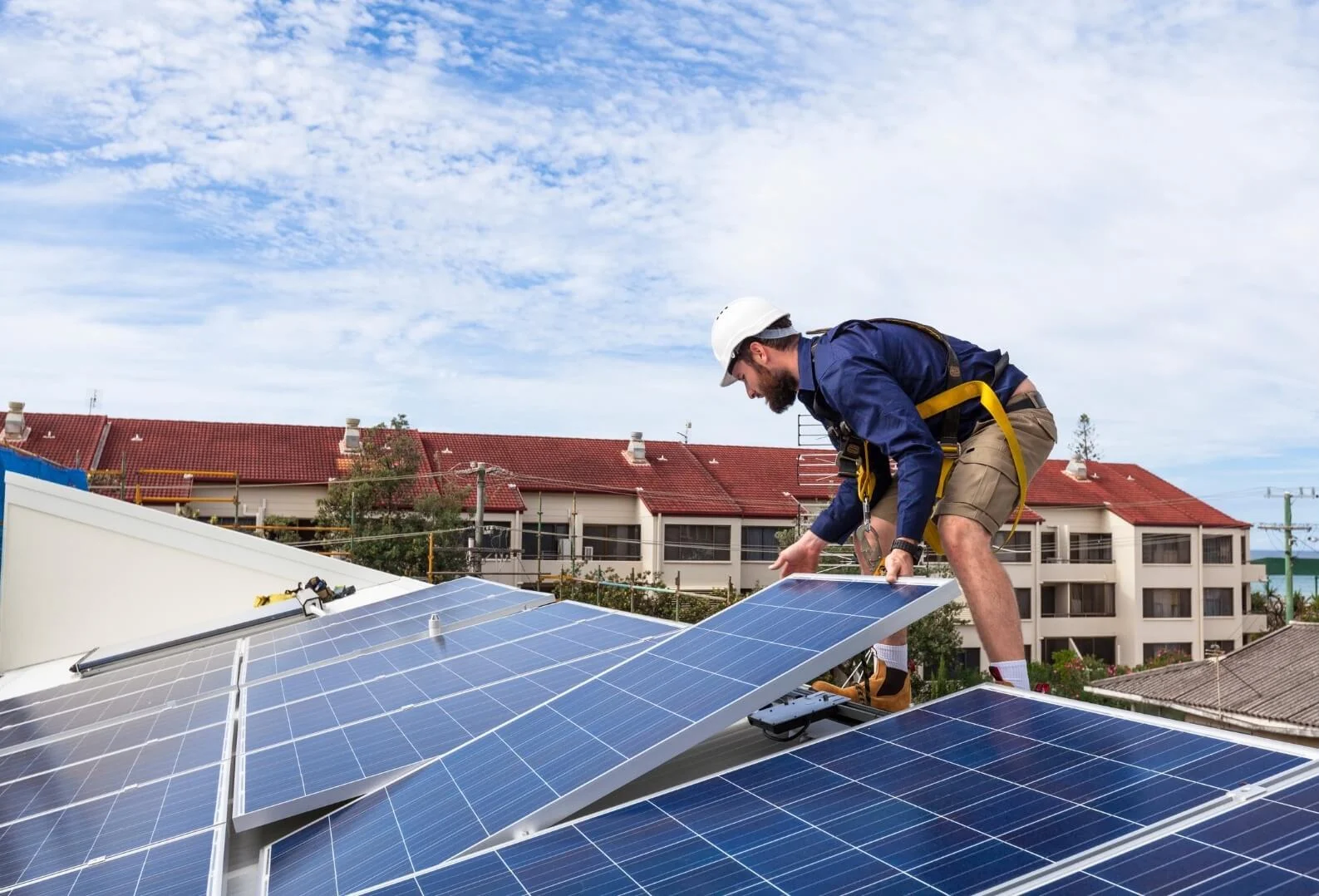
The recent decision to increase feed-in tariffs for PV systems from 40 to 750 kWp is an important step forward. This adjustment, decided by the committee, aims to align the tariffs with the significantly increased system and financing costs caused by the development of interest rates and inflation. The feed-in tariff under the EEG is set to rise by 1.52 ct/kWh from the current 6.14 to 7.64 ct/kWh. This addresses a central demand of the solar industry, for which the German Solar Industry Association has been advocating strongly in recent months.
The BSW Solar has tirelessly pushed for this adjustment, highlighting the need to accelerate the installation of PV systems on commercial buildings, especially those with low self-consumption potential. Reasons cited for the sluggish growth include long payback periods and overly high certification requirements. The solar package now promises relief by addressing these concerns and creating a more favorable environment for the expansion of solar energy.
Facilitating Shared Energy Supply for Buildings
The solar package introduces a novel model of "Community Building Supply" in the EnWG, enabling seamless shared use and distribution of solar power within a building. This model taps into a previously untapped market segment, particularly relevant for around six million small multi-family houses and commercial enterprises. By incorporating various improvement suggestions from BSW-Solar, this amendment has the potential to catalyze growth in this promising PV market segment.
The introduction of the model within the solar package represents a paradigm shift in how solar energy is harnessed and utilized in buildings. This innovative approach aims to democratize access to clean energy by enabling seamless shared use and distribution of solar power among multiple consumers within the same building infrastructure.
At its core, this model recognizes that the potential of solar energy extends beyond individual consumption and benefits the community at large. By leveraging advances in smart grid technology and metering infrastructure, buildings can now function as microgrids, where excess solar energy generated on the roof is efficiently distributed and utilized among the various stakeholders.
In practice, this means that in residential buildings with multiple tenants or mixed-use commercial properties, the solar energy generated on the roof can be shared among the various users, including tenants, business owners, and community facilities. This not only optimizes the use of renewable energy resources but also strengthens the sense of collective responsibility and sustainability within the building community.
Moreover, implementing shared energy supply models for buildings can lead to tangible economic benefits for all involved parties. Tenants and businesses can benefit from lower electricity costs by accessing clean, locally generated power, while building owners can use solar energy as an additional revenue stream or as added value for their properties.
However, the successful implementation of shared energy supply models for buildings requires careful consideration of technical, legal, and contractual aspects. Factors such as fair energy allocation, billing and metering mechanisms, grid integration, and legal frameworks for energy-sharing agreements must be carefully examined to ensure transparency, fairness, and compliance with legal regulations.
Despite these challenges, the potential benefits of shared energy supply for buildings are undeniable. By promoting collaboration, resilience, and sustainability at the community level, this model represents a significant step towards energy autonomy and reducing carbon emissions in urban environments.
Essentially, the inclusion of provisions for shared energy supply for buildings in the solar package underscores a broader commitment to adopting renewable energy and fostering inclusive, resilient communities powered by clean, locally generated energy. As we transition to a sustainable energy future, shared solar initiatives offer a compelling path to greater energy equity, environmental responsibility, and economic prosperity for all.
Expansion of Tenant Electricity with Solar Modules
The expansion of tenant electricity concepts is experiencing significant growth as part of the current reforms. No longer limited to the usual integrated residential buildings, these concepts are now set to be implemented on commercial roofs, outbuildings, and garages. The key is that the generated electricity is used directly on-site without feeding it into the public grid.
This groundbreaking reform, inspired by a recommendation from the German Solar Industry Association, aims to make solar energy more widely accessible and create incentives for its application in various building types. By installing PV systems on these surfaces, not only can electricity costs be reduced, but self-consumption can also be maximized. The latest regulations and simplifications for balcony PV systems in Germany significantly ease the registration and requirements for these systems.
Integrating modules on commercial roofs, outbuildings, and garages opens up new possibilities for the installation and operation of a PV system. Compared to traditional systems on residential buildings, installation on these surfaces may require specific adjustments, particularly regarding inverters and mounting structures. Financial support for balcony power plants, including a possible grant of up to 500 euros, is also available.
By expanding the tenant electricity concept to commercial locations, companies can benefit not only from the ecological advantages of solar energy but also from long-term reductions in their energy costs. This development not only contributes to promoting renewable energies but also strengthens resilience and sustainability in urban environments. Balcony power plants offer advantages to both tenants and homeowners, as they are easy to install and can reduce electricity costs.
Overall, the expansion of tenant electricity with modules on commercial sites opens up new perspectives for decentralized energy supply and underscores the potential of solar energy as a driving force for a sustainable future. Such modules can greatly assist tenants, making a photovoltaic system worthwhile. The legal simplifications allow ordinary citizens to use photovoltaic systems on their balconies, offering both ecological and financial benefits.
Changes in Plant Aggregation
Proposed regulatory changes aim to prevent the aggregation of solar systems operated at different grid connection points, thereby improving the use of tenant electricity in building complexes with multiple grid connections.
The proposed regulatory changes mark an important step towards more efficient use of solar energy in building complexes with multiple grid connections. The goal is to prevent the aggregation of solar systems operated at different grid connection points, thereby improving the use of tenant electricity.
Another aspect discussed in connection with these changes concerns the promotion of balcony power plants. These innovative solar energy systems allow tenants and homeowners to generate solar power even in limited space. By integrating solar modules into special plug-in solutions, balcony power plants can be easily and cost-effectively installed without requiring extensive structural measures.
This promotion of balcony power plants aligns with the goal of maximizing solar energy generation on various roof surfaces. In addition to traditional pitched roofs and tiled roofs, flat roofs and other suitable surfaces are also considered potential sites for solar modules. By more broadly utilizing these roof surfaces, additional capacities for solar energy generation can be tapped, reducing dependence on conventional energy sources.
To ensure transparency and accessibility of these new regulations, corresponding information and guidelines are made available for download. This enables building owners, installers, and other stakeholders to stay informed about the current guidelines and best practices related to the installation and use of solar energy systems.
Overall, the proposed changes signal a positive step towards a more sustainable and decentralized energy supply. By promoting balcony power plants and optimizing plant aggregation, the use of solar energy in building complexes becomes more efficient and profitable, ultimately leading to a reduction in CO2 emissions and strengthening energy autonomy.
Lowering Auction Thresholds for Building Systems and Their Contribution to Climate Protection
Despite a doubling of the auction volume for building systems, the decision to lower the mandatory participation threshold for commercial roofs from 1 MWp to 750 kWp has raised concerns at BSW-Solar. This adjustment, seen as a potential market barrier for commercial one-time investors, contrasts with the government's decision to raise the auction threshold just last year.
However, lowering the auction thresholds holds the potential to maximize energy generation on commercial roofs, thereby making a significant contribution to climate protection. By easing access to auction participation, more companies are encouraged to invest in solar energy generation, thus reducing their ecological footprint.
Particularly relevant is the consideration of different roof inclinations and conditions, allowing for efficient installation of solar modules and optimization of energy generation. From flat industrial roofs to sloped roofs of commercial buildings, various building structures offer a range of opportunities to effectively utilize solar energy and advance the transition to sustainable energy supply.
Overall, lowering the auction thresholds demonstrates a clear intent to advance the expansion of renewable energies and intensify the fight against climate change. By creating more favorable conditions for commercial solar systems, not only is energy autonomy strengthened, but a dynamic and diverse energy economy is also promoted, which will have long-term positive impacts on the environment and society.
Promotion of PV Systems
The promotion of PV systems is a crucial factor in accelerating the expansion of solar energy in Germany. With Solar Package I, various support programs are being launched to facilitate and make the installation of solar energy systems more attractive. These promotions can vary depending on the federal state and region, but there are also nationwide programs that offer support.
An outstanding example is the promotion of balcony power plants. These small but efficient PV systems allow tenants and homeowners to generate solar power even in limited space. Through Solar Package I, grants of up to 500 euros can be awarded for the installation of such balcony power plants. This financial support lowers the entry barriers and makes the use of solar energy accessible to a broader population.
Overall, the promotion of PV systems contributes to advancing the energy transition and reducing dependence on fossil fuels. Through targeted support programs, not only is the expansion of solar energy supported, but an important contribution to climate protection is also made.
Expansion of PV Systems on Roofs
The expansion of PV systems on roofs plays a central role in the energy transition and is significantly promoted by Solar Package I. More and more federal states and municipalities are introducing a solar obligation, further advancing the expansion of photovoltaics in Germany. These measures aim to maximize the use of solar energy and reduce electricity costs for households and businesses.
The installation of PV systems on roofs offers numerous advantages. In addition to reducing electricity costs, it also contributes to environmental protection by reducing CO2 emissions. Through Solar Package I, various support programs are provided to financially support the installation of PV systems on roofs. These programs offer grants and financial incentives to lower investment costs and increase the profitability of the systems.
Overall, the expansion of PV systems on roofs demonstrates the enormous potential of solar energy to make a significant contribution to sustainable energy supply. By utilizing roof surfaces, additional capacities for solar power generation can be tapped, further reducing dependence on conventional energy sources.
Grid Connection and Electricity Billing
Grid connection and electricity billing are essential aspects of installing PV systems. Solar Package I brings various regulations that simplify these processes, thereby facilitating the installation of solar energy systems. One of the most significant innovations is the introduction of a right to lay connection lines for renewable energy systems on public land.
This regulation enables the necessary infrastructure measures for the grid connection of PV systems to be implemented more quickly and efficiently. This facilitates access to solar energy systems and promotes the integration of renewable energies into the power grid. Additionally, Solar Package I also simplifies the billing mechanisms for the generated solar power, increasing transparency and traceability for PV system operators.
Overall, these measures contribute to further optimizing the use of solar energy and advancing the energy transition. By simplifying grid connection and electricity billing, the installation of PV systems becomes more attractive and accessible, ultimately leading to a more sustainable and decentralized energy supply.
What You Should Know Now: Reliable Solar Package
Solar Package I is an important milestone on the path to renewable energies in Germany and reflects a hard-fought compromise between various stakeholders. With provisions covering a wide range of challenges and opportunities, this legal framework sets the stage for accelerated growth of the commercial solar sector. ENLAPA continues to advocate for sustainable energy solutions and is committed to leveraging these legal changes to achieve positive ecological and economic outcomes. Stay tuned to learn more about our ongoing efforts to advance the adoption of solar energy.