


Renting Your Roof: Harnessing Photovoltaics and Seizing the Opportunity
Are you fascinated by the idea of turning your unused roof space into a profitable asset? Imagine harnessing the power of solar energy while earning a regular income - this is not just a dream, but a tangible opportunity waiting to be explored by renting out your roof.
Utilizing solar energy not only offers ecological benefits but also protects against rising energy prices and provides financial advantages.
In the era of renewable energies, leasing roofs for the installation of solar systems has become a profitable and lucrative option for property owners. But what exactly does this mean, and how can you best take advantage of this opportunity to rent out your roof space?
In this article, we delve into the world of roof leasing for solar energy and present the various income models available to property owners. From one-time lease payments to annual contracts and percentage shares of electricity revenues, there is a wide range of options to suit every need and preference. Renting out roof space is definitely an option you should consider. After all, photovoltaics is also an option that is great for the environment. But before we get into the details, it's important to understand the basics. We discuss what minimum size is required to make the planning effort worthwhile and ensure that your roof space is not only suitable but also optimized for the photovoltaic system.
Furthermore, we highlight the most common compensation options: a one-time lease payment for the first 20 years or the possibility of a free roof renovation in exchange for a percentage share of the electricity revenues. Understanding these options will allow you to make informed decisions about the potential of your property. Additionally, we will clarify the difference between leasing and renting, emphasizing that it is a long-term commitment that offers both stability and sustainability. Along the way, we address some frequently asked questions to provide clarity and guidance. From determining the suitability of your roof space to understanding maintenance responsibilities, we will cover all the essentials to pave your way to this exciting opportunity.
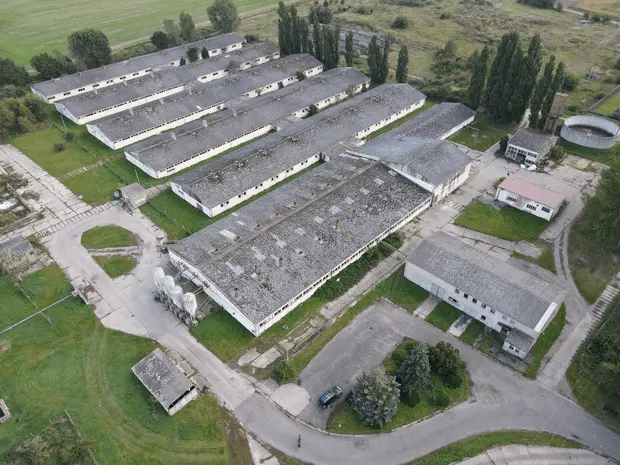
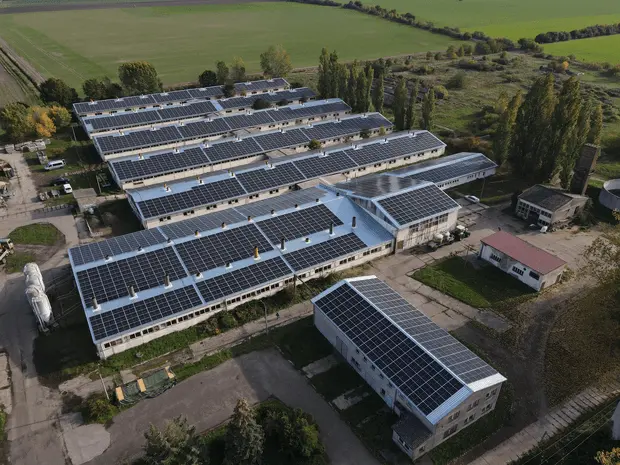
Example project in Langensalzwedel, pig farming, 2.1 MW by a project developer active on ENLAPA
So if you've always considered the possibility of renting your roof for solar energy use, now is the right time to explore the possibilities. Join us as we uncover the potential of your roof space, one solar panel at a time.
What is Photovoltaics?
Photovoltaics is a fascinating technology that allows light energy to be directly converted into electrical power. This is achieved through the use of solar cells, which are combined in photovoltaic modules. When sunlight hits these cells, they generate direct current, which can either be used directly or fed into the public power grid. This technology offers a sustainable and environmentally friendly way to generate electricity and helps reduce dependence on fossil fuels.
Benefits of Photovoltaic Systems
Photovoltaic systems offer a variety of benefits that make them an attractive option for property owners. First, they enable a significant reduction in electricity costs, as the generated electricity can either be used directly or fed into the grid, leading to savings on electricity bills. Second, they provide a long-term and stable source of income through feed-in tariffs or lease payments. Third, they increase the value of the property, as buildings with installed photovoltaic systems are considered more environmentally friendly and energy-efficient. Finally, they contribute to the reduction of CO2 emissions and support the global energy transition towards renewable energies.
Lease Your Roof: The Different Revenue Models
If you are considering leasing your roof space for solar energy, it is important to know the different available revenue models and their costs. Each model offers unique benefits and considerations tailored to different preferences and circumstances. Let's explore these options in detail:
One-Time Lease Payment
In this model, the owner who has leased the roof space receives a lump sum payment in advance, and the project developer, in return, receives the right to use your roof space for a specified period, usually 20 years or longer. The lump sum payment is typically made for the first 20 years, the period of EEG payments. From year 20 onwards, you usually receive additional annual income, the amount of which is often based on the yield of the system. The advantage of this approach is the immediate financial gain.
Additionally, there are various subsidies that builders can take advantage of to reduce costs, such as programs and loans from institutions like the KfW Bank.
Annual Lease
In this model, owners receive a regular annual payment from the solar company during the term of the lease agreement. Although the income is spread over a longer period, this ensures a steady income stream and guarantees a constant return from your roof without having to invest yourself. Additionally, a well-planned solar system promotes independence in energy supply and contributes to grid feed-in and climate protection.
Free Roof Renovation
In some cases, solar companies offer to renovate or upgrade the roof for free if the investor, in return, receives the right to install solar panels. This model offers a win-win scenario, as the property owner benefits from the improved infrastructure through the roof renovations, while the solar company gains access to the roof space.
Percentage Share of Electricity Revenues
In this model, property owners receive a percentage share of the revenues from the sale of electricity generated by the solar modules installed on their roof. With this approach, the income is directly linked to the performance of the solar system and offers the potential for higher returns if electricity prices rise over time. Moreover, solar energy is a free resource, making the use of solar systems particularly advantageous.
Ownership of Part of the System
In some cases, property owners choose to receive a portion of the photovoltaic system installed on their roof instead of a lease payment. They thus become owners of part of the system and produce their own solar power. These photovoltaic modules can either be used by themselves or sold. You can expect to receive approximately 6-10% of the total system for yourself.
By considering these different revenue models, property owners can choose the option that best suits their financial goals, risk tolerance, and long-term objectives. Whether they seek an immediate lump sum, regular income over time, or a combination of both, leasing roof space for solar energy offers property owners a flexible and profitable way to maximize the full potential of their assets.
Our Recommendation: Lease with One-Time Payment or Free Roof Renovation
Among the various revenue models available for leasing roof space for solar energy, one option stands out: leasing with a one-time payment or a roof renovation for the first 20 years, followed by a revenue share from electricity sales.
An important technical requirement for the suitability of a roof is the roof pitch. A pitch of about 30 to 35 degrees is optimal for maximum yields, while roofs that are too flat or too steep can impair electricity generation. Additionally, insufficient roof pitch can cause weather-related damage.
With this compensation variant, property owners have the opportunity to choose between two different arrangements, each offering a range of benefits:
- One-Time Payment for the First 20 Years
In this scenario, property owners receive a one-time lump sum payment from the lessee for the right to use their roof space for a predetermined period, usually 20 years. The amount of this payment is typically between 110-220 €/kWp, which corresponds to about 20-45 € per square meter of roof space. This advance payment provides property owners with an immediate financial advantage and offers a steady income over the entire lease term. You can now invest the money yourself and generate further returns from it, or use it, for example, for yourself and your family.
- Free Roof Renovation for the First 20 Years
Alternatively, property owners can opt for a free roof renovation, and in return, the lessee receives the right to use the roof for 20 years, usually free of charge.
From Year 21: Percentage Share of Electricity Revenues
From the 21st year onwards, you will receive a percentage share of the electricity revenues generated by the solar cells installed on your roof in both cases. This percentage is usually between 6 and 10% and, due to rising electricity prices, is expected to exceed the initial revenues from the first 20 years of the lease agreement. With this option, property owners can benefit from both a high lump sum or the improvement of their roof infrastructure and then from a share of the ongoing revenues from the photovoltaic system. The performance of PV systems plays a crucial role here, as higher performances can lead to more attractive feed-in tariffs under the new EEG.
Both options offer property owners compelling opportunities to utilize their roof space while contributing to the expansion of renewable energy infrastructure. Whether the immediate financial gain or long-term sustainability is the focus, these compensation options offer flexibility and profitability for property owners looking to maximize the potential of their assets in the solar energy market.
Leasing or Renting Your Roof: Clarifying the Terminology
In the field of using roof space for solar energy, it is important to distinguish between two commonly used terms: leasing and renting. Although they sound similar, they have different legal and financial implications, especially when using properties for commercial purposes such as photovoltaics.
When property owners enter into agreements with solar installation companies for the use of their roof space for solar panels, it is important to understand that the correct terminology is 'lease.'
Here's why:
Leasing: In a lease agreement, the right to use property for a specified period is granted in exchange for payment. In the context of solar energy, property owners lease their roof space to solar companies so that they can install and operate solar panels in exchange for financial compensation. This agreement is usually associated with a long-term commitment, often spanning decades, and is governed by a formal lease agreement that sets out the terms of the agreement.
Renting: Renting, on the other hand, generally refers to the temporary rental of property for residential or commercial purposes. It is a short-term agreement where tenants use the property for a specified period in exchange for rent. Rental agreements are common for residential and commercial properties but do not apply to the use of roof space for solar systems.
By clarifying that the agreement between property owners and solar companies is a lease and not a rental, it ensures that both parties understand the nature of the agreement and their respective rights and obligations. This distinction is essential for legal clarity and financial transparency to protect the interests of all parties involved. So if you are considering utilizing the potential of your roof space for solar energy, remember: it is a lease, not a rental. Understanding and using the correct terminology is the first step to building a successful and mutually beneficial partnership in the field of renewable energies.
Environmentally Friendly Energy through Photovoltaics
The use of photovoltaic systems for electricity generation is not only economically advantageous but also environmentally friendly. Photovoltaic systems generate clean electricity without causing harmful emissions. Unlike fossil fuels, which release CO2 and other pollutants when burned, photovoltaic systems harness the inexhaustible energy of the sun. This significantly contributes to reducing the ecological footprint and supports efforts to combat climate change. By installing photovoltaic systems on your roof, you make a valuable contribution to promoting sustainable energy sources and preserving our environment for future generations.
FAQ: Leasing Your Roof, Everything You Should Know
Solar and roof leasing is a topic that is becoming increasingly relevant. In this FAQ, we answer all your questions about roof rental, solar system rental, roof space rental, and PV!
We hope we have answered all your questions about solar direct investment and renting your roof for solar and that you are now more informed about your own roof space. Perhaps you will soon have your own photovoltaic system.