


PV Mounting on Open Land: What the Design Means for You as a Landowner
The mounting system — the racking that carries the solar modules — sounds like a purely technical topic for project developers. For you as a landowner, however, there is more to it: the design decides how much module capacity fits on your hectare (and thus the basis of your lease), how much your soil is affected, and how the land is restored after 20 to 40 years. This article explains the four common mounting designs for ground-mounted PV from a lessor's perspective — without technical ballast, but with the points that belong in your lease agreement.
Key facts at a glance
- Four designs: fixed south-facing (the classic), fixed east-west (denser layout, yields shifted into morning and evening hours), sun-tracking systems (more yield per module, higher cost), and vertical/elevated mounting for agri-PV (land stays farmable, but with considerably lower lease income).
- Packing density = lease basis: South-facing plants reach up to 1.2 MWp per hectare, east-west plants up to 1.4 MWp — more capacity per hectare means more revenue, out of which your lease is paid.
- No concrete in the field: Ground-mount frames usually stand on rammed steel profiles or screw foundations — the soil remains largely unsealed and the plant is fully removable.
- Your job is the contract, not the technology: The developer plans and pays for the substructure. You secure the decommissioning obligation including foundations in the lease agreement — with a bond or reserve.
- First step: Whether your land qualifies at all, the free ENLAPA area check tells you in seconds.
Why the mounting system matters to lessors too
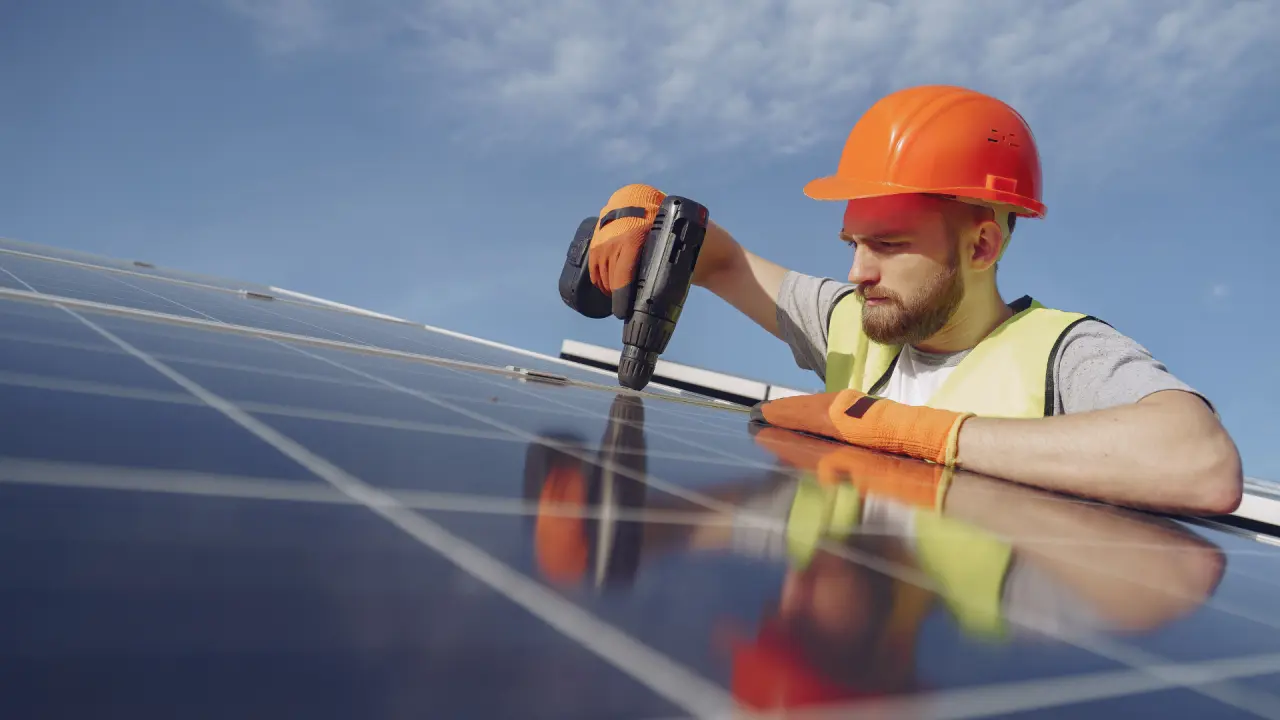
As a landowner, you do not have to choose a substructure — the project developer does, and they are responsible for structural engineering, construction, and maintenance, and they carry the cost. But the design touches your interests in three places:
- Lease basis: How much module capacity fits on your hectare depends on the layout. The operator pays your lease out of the plant's electricity revenue — the more capacity that can be economically installed per hectare, the stronger your negotiating position. The typical ranges and price drivers are covered in Photovoltaic Lease Prices 2026.
- Soil and after-use: Whether your field can return to unrestricted use after the lease ends depends on how the frames are founded and on a properly secured decommissioning obligation.
- Dual use: Vertical or elevated systems (agri-PV) keep the land farmable — at the price of a considerably lower lease.
The four designs at a glance
1. Fixed mounting, south-facing — the classic
Rows of fixed modules tilted toward the south. This design is robust, low-maintenance, and proven over decades — the majority of German solar parks are built this way. South-facing plants reach up to 1.2 MWp per hectare. Spacing between the rows prevents mutual shading; there and beneath the modules, extensive grassland usually develops, maintained or grazed by sheep — which typically benefits biodiversity more than the previous intensively farmed field, as our guide Solar Parks and Biodiversity shows.
2. Fixed mounting, east-west — denser layout, shifted into peripheral hours
Increasingly, ground-mounted plants are built facing east-west rather than south: module rows forming flat "roofs" that harvest toward the east in the morning and toward the west in the evening. In absolute terms, the plant generates slightly less electricity per module — but it generates it when it is worth more. Around midday, the many solar plants on the grid tend to create a surplus with very low, sometimes negative exchange prices; the morning and evening hours bring noticeably better revenues. Add the denser layout: east-west plants reach up to 1.4 MWp per hectare instead of 1.2 MWp for south-facing designs. For you as an owner, that is good news — more economically usable capacity on the same land strengthens the basis out of which your lease is paid.
3. Tracking systems
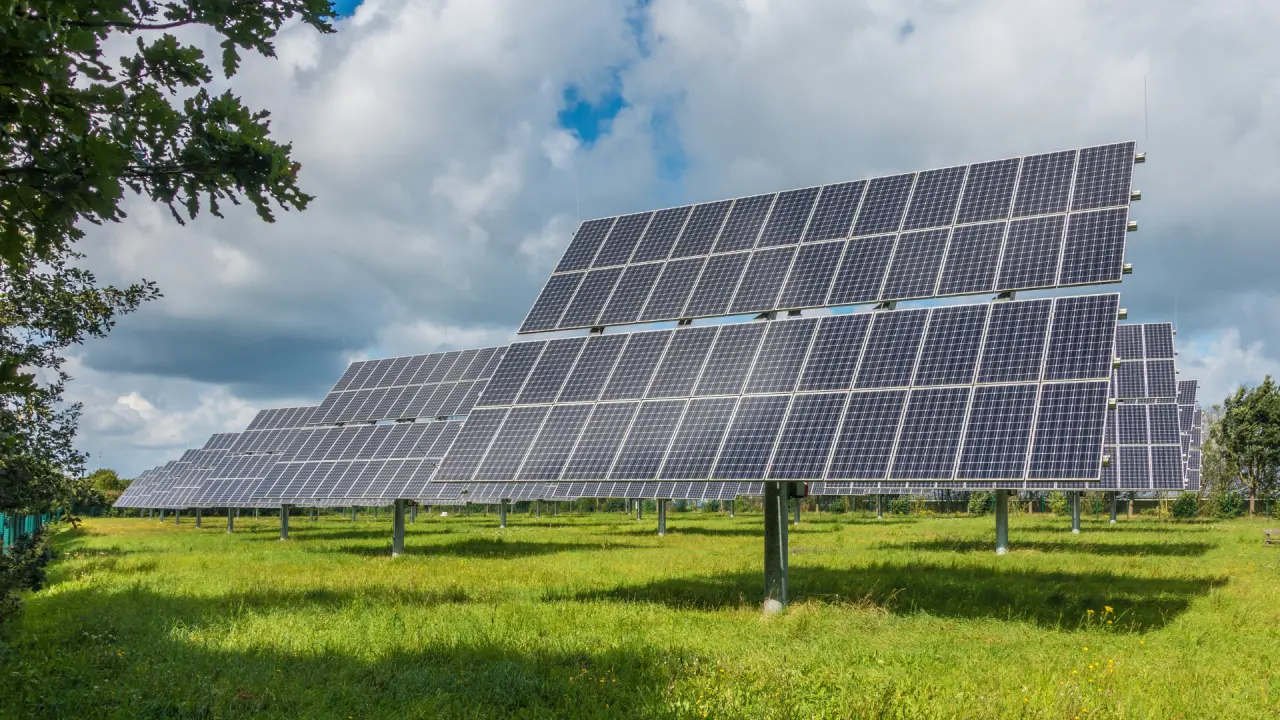
Trackers turn the modules to follow the sun and extract more yield per module. This comes with higher acquisition and maintenance costs and moving parts — which is why tracking systems have so far been the exception in German solar parks and are more common in very sunny regions. Whether a developer plans trackers on your land changes little for your contract; the decommissioning and soil questions are the same as for fixed systems.
4. Vertical or elevated — agrivoltaics
Upright bifacial module rows or elevated "roofs" beneath or between which farming continues. The technology — vertical systems, movable and fixed variants — is explained in our agrivoltaics overview, where a configurator lets you try out how much of the land remains farmable. For the lease decision, one thing matters most: because of the lower packing density, agri-PV lease income typically ranges from €1,000–3,000/ha per year — about one-third below classic ground-mounted PV. When agri-PV is still worthwhile (and when it is not) is covered in Agri-PV Disadvantages.
Foundations: no concrete in the field
The frames of ground-mounted plants are usually placed on rammed steel profiles or screw foundations — mostly without any large-area concrete foundations. That has two consequences that matter to owners:
- The soil remains largely unsealed. Rainwater continues to percolate, soil life is preserved, and extensive grassland grows between the rows.
- The plant is fully removable. After the lease ends, the profiles are pulled, cables and equipment removed — the land can return to unrestricted agricultural use.
To make sure this is not only technically possible but legally secured, your lease agreement needs a complete decommissioning obligation that explicitly includes the foundations, secured by a decommissioning bond or reserve — otherwise the costs may end up with you. The details are covered in our guide on the photovoltaic lease agreement.
What to ask the developer
Even though the design is their decision — these questions help you compare offers and stand firm in the municipal council:
- Which layout is planned (south, east-west, trackers, agri-PV) — and what capacity per hectare does the project assume?
- How will the frames be founded? Rammed profiles/screw foundations without concrete should be the norm; large-scale concreting would need explaining.
- Does the decommissioning obligation explicitly include the foundations, and how is it secured (bond/reserve)?
- How will the land between the rows be maintained (extensive grassland, grazing) — also as an argument for the municipality?
Permitting of the plant itself — development plan, criteria, timelines — is covered in Ground-Mounted PV Approval. And since the grid connection request drives the timeline between lease offer and construction more than anything else (in one case we documented: queue position 99, behind requests totaling 4,753 MW, around eight months of waiting), starting early pays off — the full process is shown in Building a Solar Park 2026.
What you can do right now as a landowner
- Check your land: Use the free area check to find out in seconds whether your land fundamentally qualifies for a ground-mounted plant — the mounting question comes later.
- Compare offers: Ask every offer for the planned layout and capacity per hectare — that makes lease offers comparable.
- Secure decommissioning: Decommissioning obligation including foundations, with a bond or reserve, into the lease agreement.
- List your land: Via the ENLAPA marketplace you reach project developers actively searching for land — for classic PV, agri-PV, or storage.
Frequently asked questions
Conclusion
The mounting system is the lever a project developer uses to balance yield, packing density, and land use on your plot — from the classic south-facing layout, to denser east-west plants, to agri-PV, which preserves farming but brings considerably less lease income. Your job as an owner is not the technology but the contract: secure decommissioning including foundations, and compare offers by the planned capacity per hectare. Check now in seconds with the free ENLAPA area check whether your land fundamentally qualifies — or list your land directly on our marketplace. How the leasing process works in detail is covered in Lease Land for a Solar Park.